GreenSource Organic Farm Achieves Digital Transformation with an Integrated Farm Management & Traceability Platform
From Manual Farm Operations to Data-Driven Growth
GreenSource Organic Farm (a pseudonym) is a mid-sized agricultural enterprise focused on producing high-quality organic vegetables and fruits. With around 200 acres of certified organic planting and a team of about 50 employees, the farm has grown alongside rising consumer demand for safer, more transparent food. However, as the business expanded, the original ways of managing day-to-day operations and selling products began to limit scalability—especially in areas like inventory control, supply-chain traceability, and brand online presence.
To address these limitations, GreenSource Organic Farm partnered with [Your Company Name] to execute a digital transformation program designed to connect farm operations with e-commerce growth. The initiative combined a tailored Farm Management System (FMS), end-to-end traceability capabilities, an official independent online store with a membership system, and a data analytics platform to support real-time, decision-ready insights.
Situation: Expansion Outpaced Traditional Management
Before the project, GreenSource Organic Farm relied heavily on manual processes and offline sales channels. While the farm had strong product quality, operations were not yet equipped for the efficiency, transparency, and agility required by modern organic consumers.
Several gaps became increasingly obvious:
- Inventory management was inconsistent: inbound and outbound tracking, as well as spoilage/loss records, depended largely on manual entry. This led to frequent issues such as inventory inaccuracies, stockouts, and overstock.
- Traceability information was difficult to provide: consumers increasingly expected “from farm to table” transparency, but the farm could not easily deliver clear, instant, and verifiable traceability data—reducing trust and limiting differentiation.
- Online sales channels were limited and inefficient: the farm mainly relied on a basic store on a general e-commerce platform. Without a dedicated brand website and robust membership capabilities, marketing options were restricted, and repeat purchase behavior remained weak (with repeat rates below 20%).
- Data-driven decision-making was missing: sales performance and customer preferences were not systematically captured and analyzed. As a result, forecasts and marketing strategies were based more on experience than on evidence.
These issues constrained growth and made it harder to keep inventory, production timing, and customer expectations aligned.
Task: Digital Transformation with Clear Business Goals
GreenSource Organic Farm had a clear set of strategic needs for the collaboration:
- Improve operational efficiency through digitalization
- Strengthen brand trust by enabling transparent traceability
- Expand high-efficiency online sales channels with stronger conversion and repeat purchase capability
- Build an analytics capability so the management team could make more accurate purchasing, production, and marketing decisions based on real-time information
In short, the goal was to build an end-to-end system that connects farm operations, product provenance, online commerce, and data insights into a unified workflow.
Action: Building an Integrated Platform for Farm Ops, Traceability, and E-Commerce
[Your Company Name] delivered a comprehensive solution covering three core areas: a customized Farm Management System (FMS) with traceability, an independent online store and membership system, and a BI-enabled analytics platform.
1) Custom Farm Management System (FMS) Development
To reflect the farm’s actual operating realities, the team invested in a tailored FMS designed for core workflows such as planting management, harvesting management, inventory management, order management, and logistics delivery.
Project resourcing and timeline: the development included 5 senior engineers, 2 product managers, and 1 UI/UX designer, delivered over 3 months for system building. The overall project reached implementation completion within 6 months.
Technology foundation: the system used a microservices architecture, with Java Spring Boot for backend services, Vue.js for the frontend, and MySQL and Redis for data storage and caching. Barcode and QR-code scanning were integrated to enable practical, day-to-day use by farm staff.
Implementation steps:
- Requirements research and process analysis: multiple rounds of on-site communication with farm administrators, warehouse staff, and sales staff to map the real business process from the ground up.
- System design and development: designed and built modules aligned with the farm’s operational flow, including planting, harvesting, inventory control, order tracking, and delivery.
- Traceability module integration: for each product batch, the platform generated a unique traceability QR code. The system captured full-chain information—such as planting conditions, fertilization records, harvesting events, testing results, processing activities, and transportation details.
- Testing, readiness, and go-live: performed functional tests, performance tests, and user acceptance testing to ensure stability and usability after rollout.
- Employee training: provided structured training so farm employees could confidently operate the platform during daily workflows.
By connecting operational data with traceability outputs, the FMS became the “source of truth” for both internal management and consumer-facing transparency.
2) Independent Online Store and Membership System
To reduce reliance on generic platform-only sales, [Your Company Name] helped GreenSource Organic Farm build an official independent online store and a structured membership system. This approach enabled the farm to control branding, improve personalization, and create stronger repeat purchase mechanics.
How it was built: using a mature e-commerce SaaS platform as the base, the team performed targeted secondary development to match GreenSource’s product catalog, operational workflow, and marketing needs—accelerating delivery without sacrificing key capabilities.
Key features delivered:
- Product listings and merchandising
- Online ordering with multiple payment methods
- Order tracking
- Member registration and account management
- Points system, coupons, and promotions
- Personalized recommendations to increase relevance
- Marketing plugins such as group buying, flash sales, and member days
With these capabilities, the farm could run campaigns that actively drive customer engagement and loyalty, rather than depending solely on marketplace visibility.
3) Data Analytics Platform Deployment
To close the gap in data-driven decision-making, the project also included a lightweight BI integration that consolidated data from the FMS and the online store.
Dashboards and insights included:
- Sales reporting and performance tracking
- Inventory turnover analysis
- Customer image/segment analysis (based on available data)
- Marketing activity evaluation and effectiveness measurement
This transformed data from “records” into “actionable intelligence,” supporting more accurate decisions for procurement, production scheduling, and sales planning.
Result: Quantifiable Improvements Across Operations, Trust, and Revenue
After implementation (within 6 months), GreenSource Organic Farm achieved measurable outcomes across multiple dimensions: operational efficiency, inventory accuracy, product loss reduction, brand trust improvement, and digital commerce growth.
1) Operational Efficiency Improved Significantly
- Inventory accuracy increased from 75% to 98%
- Product loss rate decreased from 15% to 5%, saving approximately 300,000 RMB per year
- Order processing time reduced by 60%
These improvements directly reduced operational waste, stabilized supply, and improved the farm’s ability to fulfill customer demand reliably.
2) Stronger Brand Trust Through Traceability
With the QR-code traceability system embedded into the consumer journey, product provenance became clear and accessible. As a result, more consumers felt confident about the quality and integrity of GreenSource Organic Farm’s offerings.
- Over 90% of consumers reported that traceability enhanced their trust in GreenSource products
- Customer satisfaction score improved from 3.8 (out of 5) to 4.7 (out of 5)
Trust is especially critical in organic food markets, where verification and transparency influence purchase decisions.
3) Online Sales Performance Increased Rapidly
The independent store and membership system enabled stronger engagement and repeat purchasing. With data-supported marketing tools, GreenSource Organic Farm improved both topline growth and customer retention.
- Monthly average online sales grew by 200%
- Repeat purchase rate increased from below 20% to 45%
- Member growth reached 150% within 3 months
These results demonstrate how combining operational truth (traceability and inventory accuracy) with commerce capabilities (store, loyalty, promotions) can unlock sustained growth.
4) Data-Driven Decision-Making Became the Default
Instead of relying on experience alone, management gained real-time visibility into sales performance, inventory flow, and marketing outcomes. This helped them reduce “blind” decision-making and improve alignment between production and market demand.
In practice, the BI dashboards supported more accurate procurement decisions, better production planning, and improved marketing strategy selection—reducing waste while increasing the likelihood of meeting customer expectations.
Customer Feedback
“[Your Company Name] provided a solution that closely matched our business needs. Their team was professional and efficient—helping us resolve long-standing operational pain points while accelerating our online growth. Today, our operations run more smoothly, and customers trust our brand more.” — CEO Zhang, GreenSource Organic Farm
Why This Case Matters
This case highlights a repeatable transformation pattern for B2B enterprises in food and agriculture: when operational data is fragmented, growth opportunities become hard to capture; when traceability and inventory accuracy are built into the workflow, consumer trust improves; and when commerce and analytics are integrated, marketing becomes measurable and repeatable.
GreenSource Organic Farm’s outcomes—98% inventory accuracy, loss rate reduced to 5%, order processing time cut by 60%, online sales up 200%, and repeat purchase rising to 45%—show that an integrated platform approach can produce compounding benefits across operations, brand trust, and revenue.
Next Steps
If your organization faces similar challenges—inventory inconsistency, limited traceability, and insufficient online conversion—[Your Company Name] can help design a tailored roadmap that connects your operational systems to traceability experiences and revenue-focused commerce workflows.
Get in touch with us!
and everything in between, our team of experts are always ready to assist.

Related Solution
We offer a range of manufacturing capabilities to support rapid solution production as well as low and high volume production.

Automated Production Line
High-efficiency and accurate automated production line, increasing productivity and reducing costs.
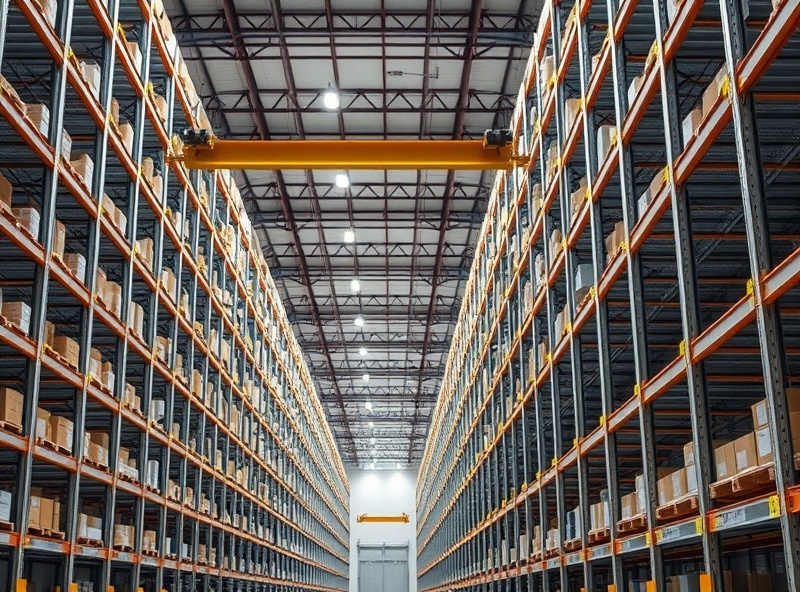
Smart Warehouse System
Intelligent warehouse management, optimizing inventory and improving logistics efficiency.

Quality Control Center
Advanced quality testing equipment ensures product quality.
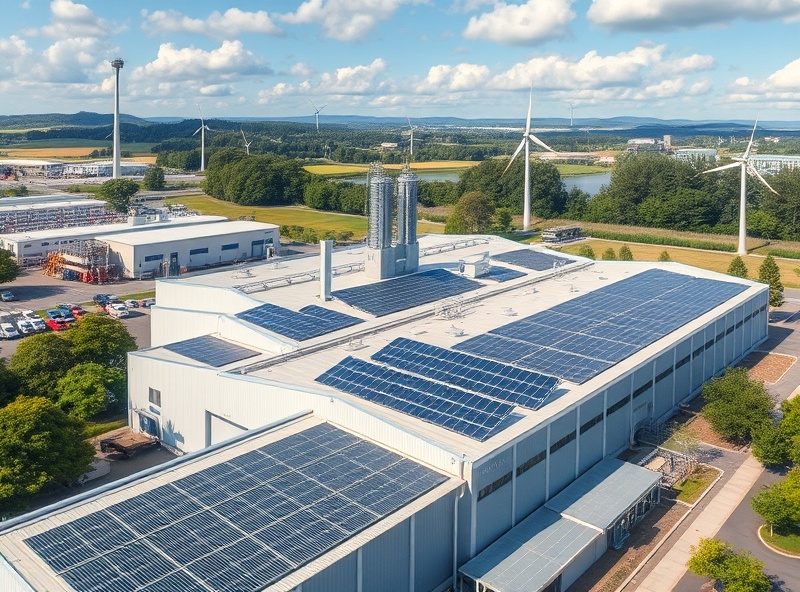
Green Energy Factory
Sustainable factory facilities, solar panels and wind turbines.